
The short answer
Colleges use short course films to show what each subject looks like in practice. Student stories add real voices, which helps applicants picture themselves there. Together, they work across the website, social media and open events.
Why video suits colleges
Choosing a college course is a big decision for a young person. Many have never seen the workshops, salons or studios they would learn in.
Video shows them. A short film of a real class answers more questions than a page of course details.
It also reaches parents and carers, who often help with the decision. They want to see where their young person will spend the next few years.
Video also works in many places at once. A single course film can appear on the website, on social media and on screens at events.
Films that work
- Course films. One short film per course, showing practical learning.
- Student stories. Learners explaining their course and their plans in their own words.
- Promotional film. A flagship film of the whole college for the homepage.
- Open event clips. Short films to play on screens and share on social media.
- Subject areas. Films for each department, from hairdressing to engineering.
What to film on a course
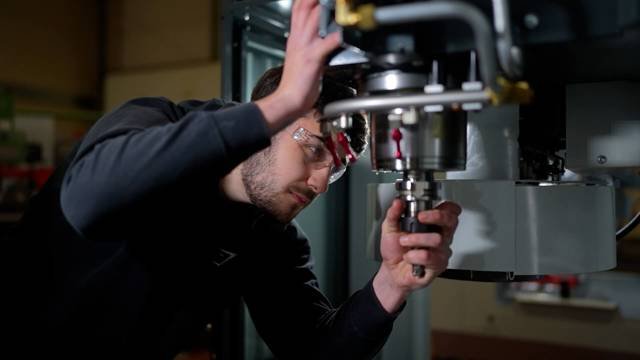
Start with the hands-on moments. A learner shaping metal, cutting hair or plating food tells the story without words.
Then show the equipment and spaces. Applicants want to know they will train on proper kit, in real working settings.
Tutors matter too. A brief shot of a tutor guiding a learner shows the support on offer.
Finally, keep each course film short and focused. Subject films of 30 to 45 seconds suit course pages and social media well.
Screen photos are useful here as well. A still of a learner at work suits a course page, prospectus or social post.
Student stories that ring true
The best student stories sound natural, not scripted. So I ask simple questions and let learners answer in their own words.
Choose learners who are happy to talk, and give them time to prepare. A quiet room and a relaxed pace help nerves settle.
Consent matters here as with any filming. Check your college's own consent records before anyone is interviewed on camera.
Short answers often work best. A learner explaining why they chose a course, in a sentence or two, carries real weight.
Also film the learner at work after the interview. Their words then sit over shots of them doing the course.
Building a library over time
Colleges have many courses, so few film everything at once. Instead, a library of films grows each year.
Derwentside College is a good example. I have filmed course films and student stories across every subject area there.
That approach spreads the cost, and keeps the website fresh. Each year's films show the college as it is now.
So plan the library in stages. Start with your most popular courses, then add new subject areas each year.
Keep a simple list of what has been filmed and when. You can then see which course pages still need a film.
Where to use them
Put each course film on its course page. Applicants browsing a subject then see it straight away.
Share student stories on social media, where young people spend their time. Short clips suit these platforms well, and I can supply vertical versions on request.
Play films on screens at open events and in reception. Then use them in school talks and careers events too.
Also think about timing. My guide to when to share your film in the admissions year applies to colleges as well.
Admissions staff can also send course films to applicants after an enquiry. A personal email with the right film keeps interest warm until enrolment.
Measuring what works
It helps to know which films applicants actually watch. Most website and social media platforms show views and watch time.
So check the numbers each term. If course pages with a film hold visitors for longer, that is a useful sign.
Also ask applicants at interview what they watched. Their answers show which films shaped their choice.
Then use what you learn to plan the next round of filming. Over time, the library grows around what applicants need.
Even a rough picture helps. It shows where the next filming day will make the biggest difference.
Questions schools ask
Do you film colleges as well as schools?
Yes. I film for colleges and training providers, as well as primary, secondary and SEN schools.
Can students speak in the films?
Yes, with the right consent. Student stories are often the most persuasive part of a college film.
Can we see examples?
Yes. My Derwentside College page shows course films and student stories.
Can you film several courses in one day?
Yes. With a clear plan, one filming day can cover several courses. The timings are agreed at the online production meeting.
Can you film in workshops and kitchens safely?
Yes. I follow your safety rules and your staff's guidance in each space, including any protective equipment needed.
Want films that help applicants picture themselves at your college? Get in touch, and I will talk through a course film library.
Book a free consultationSee pricesMore guides
- Where to use your school video: website, social media and open days
- Getting more from your school film: premieres, recruitment and the press
- What is a subject video, and how do schools use them?
- When to share your school film: an admissions year timeline
- How to put your school video on YouTube so families find it